

The origins, changes, and enduring legacies of Western civilization are all examined in this article. It takes a chronological approach to the topic, emphasizing significant eras and scholarly movements that have influenced its development. The earliest discernible roots of Western civilization as a conceptual framework can be found in the ancient Greek & Roman civilizations. Many of the political, philosophical, and artistic traditions that would eventually characterize the West were established by these societies. The Hellenic Contribution.
Ancient Greece, especially in the Archaic era (c. 800-480 BCE) through the Hellenistic Age (323-31 BCE), provided seminal intellectual and cultural developments. The significant influence of Greek thought will be evident to readers who are acquainted with history. Philosophy and Rational Inquiry: Systematic philosophical inquiry was pioneered by individuals such as Socrates, Plato, and Aristotle. Their methods of questioning, logical deduction, and ethical considerations continue to resonate. For instance, the Socratic method is still essential to critical thinking.
Political Experimentation: The Greek city-states experimented with early democratic systems, especially Athens. This emerging democratic ideal served as a model for later political ideas, despite its limitations in terms of inclusivity. Art and Architecture: For millennia, Greek sculpture and architectural orders (Doric, Ionic, and Corinthian) established aesthetic standards that impacted Western art.
The Parthenon serves as a prominent example of this enduring architectural legacy. Roman Synthesis. Republic and Empire of Rome (c. 509 BCE–476 CE) made unique contributions while absorbing and modifying many Hellenic achievements.
Rome served as an effective medium for spreading these concepts throughout a sizable empire. Law and Governance: Many contemporary legal systems are based on the principles of jurisprudence established by Roman law, which was codified in the Twelve Tables & later developed into the Justinian Code. A major innovation was the idea of a universal law that applied to all citizens. Infrastructure and Engineering: The vast road networks, aqueducts, and colossal architecture of the Romans demonstrate their mastery of engineering.
| Period | Time Frame | Key Events | Significant Figures | Major Contributions |
|---|---|---|---|---|
| Ancient Greece | c. 800 BCE – 146 BCE | Development of city-states, Persian Wars, Peloponnesian War | Socrates, Plato, Aristotle, Alexander the Great | Democracy, philosophy, art, literature, science |
| Roman Republic and Empire | 509 BCE – 476 CE | Expansion of Roman territory, Julius Caesar’s rule, fall of Western Roman Empire | Julius Caesar, Augustus, Cicero, Constantine | Law, engineering, architecture, governance, Latin language |
| Middle Ages | 476 CE – 1453 CE | Feudalism, Crusades, Black Death, Hundred Years’ War | Charlemagne, Thomas Aquinas, William the Conqueror | Feudal system, Gothic architecture, scholasticism, universities |
| Renaissance | 14th – 17th Century | Revival of classical learning, printing press invention, Age of Discovery | Leonardo da Vinci, Michelangelo, Galileo Galilei, Machiavelli | Artistic innovation, humanism, scientific inquiry, exploration |
| Enlightenment | 17th – 18th Century | Scientific Revolution, political revolutions, rise of reason | Isaac Newton, Voltaire, John Locke, Immanuel Kant | Modern science, political philosophy, individual rights, secularism |
| Industrial Revolution | 18th – 19th Century | Mechanization, urbanization, social reforms | James Watt, Karl Marx, Adam Smith | Technological innovation, capitalism, labor movements |
| Modern Era | 20th Century – Present | World Wars, Cold War, European integration | Winston Churchill, Franklin D. Roosevelt, Margaret Thatcher | Democracy expansion, human rights, technological advances |
These technological achievements facilitated communication, trade, & the administration of their vast territories. Cultural Diffusion: The Roman Empire’s expansion spread Latin, Roman legal principles, and Roman administrative structures across much of Europe and parts of North Africa and the Middle East. This process of Romanization created a shared cultural substratum. The Middle Ages (c.) began in Western Europe after the fall of the Western Roman Empire in 476 CE.
from 500 to 1500 CE. This era saw the gradual formation of distinct European identities amidst political fragmentation and the increasing influence of Christianity. The Rise of Christianity. Originally a persecuted sect in the Roman Empire, Christianity eventually rose to prominence as the dominant cultural and intellectual force in Western Europe.
Its institutional structure, the Church, often served as a unifying element in a fragmented landscape. Knowledge Preservation: In times of political unrest, monasteries were essential to the preservation of classical literature and education. By carefully copying manuscripts, monks were able to preserve ancient knowledge.
Moral and Ethical Framework: Christian theology offered a thorough moral and ethical framework that affected the law, social conventions, and personal behavior. Medieval society was significantly influenced by ideas like redemption, sin, & charity. Theological Synthesis: Scholasticism sought to harmonize Christian doctrine with classical philosophy, especially Aristotelian ideas, & was typified by individuals such as Thomas Aquinas.
This scholarly project offered a strict framework for philosophical and theological investigation. Feudalism and Emerging Political Orders. Feudalism, a decentralized socio-political structure built on reciprocal duties between lords and vassals, emerged in the early Middle Ages. Local Power Structures: Feudalism responded to the collapse of centralized authority, creating localized structures of governance & defense. Land was granted in exchange for military service, forming a complex web of allegiances.
The Formation of Kingdoms: Over time, stronger monarchies began to emerge, gradually consolidating power and laying the groundwork for modern nation-states. There were brief glimpses of centralized power during the consolidation of territories under leaders like Charlemagne. A number of revolutionary movements that drastically altered Western society, thought, and its interactions with the outside world occurred in the late Middle Ages and early modern era. The Renaissance: A Revival of Classical Principles. Renaissance times (c. 14th–17th centuries), with its roots in Italy, signaled a resurgence of interest in classical Greek and Roman literature, philosophy, and art. The emphasis was shifted from the purely otherworldly to human potential as a result of this cultural awakening.
Humanism: This school of thought placed a strong emphasis on the study of classical antiquity, individual success, and human agency. Humanists sought to understand the human condition through reason and observation, often independently of theological dogma. Artistic Innovation: During this time, artists such as Michelangelo, Raphael, and Leonardo da Vinci created works that celebrated human form and perspective. The development of linear perspective, for instance, revolutionized painting. Scientific Inquiry: The Renaissance encouraged empirical observation & a spirit of inquiry that anticipated later scientific advances, even though it was not a “scientific revolution” in its entirety.
The Reformation: Religious Upheaval and Its Consequences. The Protestant Reformation, initiated by Martin Luther in the early 16th century, shattered the religious unity of Western Europe & had profound political and social ramifications. Challenge to Papal Authority: Luther’s critique of indulgences & emphasis on “sola scriptura” (scripture alone) challenged the authority of the Roman Catholic Church and led to the proliferation of Protestant denominations. Wars of Religion: The religious divisions sparked widespread conflicts across Europe, shaping political boundaries and fostering new alliances. A clear illustration of these terrible outcomes is the Thirty Years’ War (1618–1648). Impact on Education & Literacy: The Reformation’s focus on private Bible study promoted literacy and the founding of new schools, which resulted in a more widespread distribution of knowledge.
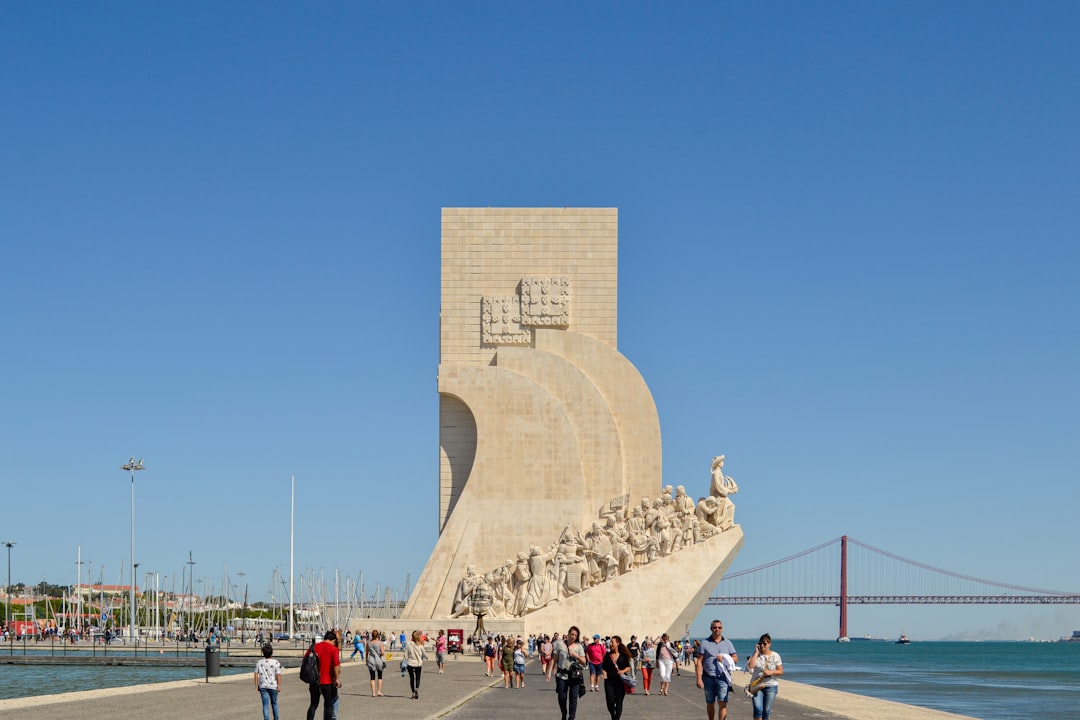
The Age of Globalization and Exploration. European powers set out on exploration expeditions at the same time as these internal changes, which resulted in the creation of international trade networks & colonial empires. Technological Developments: New developments in shipbuilding (e.g. A g. caravel), travel (e.g. g.
Long-distance maritime travel was made easier by cartography, compass, and astrolabe. Discovery and Conquest: Europeans “discovered” new continents through the expeditions of Columbus, Magellan, & others, which resulted in the conquest and colonization of enormous swaths of the Americas, Africa, and Asia. This period also initiated the transatlantic slave trade, a dark chapter in Western history.
Global Interconnectedness: The Age of Exploration significantly altered international relations, resulting in the unprecedented exchange of goods, illnesses, and ideas. This era marks the beginning of a truly interconnected world, with Europe as a significant, though not always benign, player. The 17th and 18th centuries witnessed the Enlightenment, a powerful intellectual movement that championed reason, individualism, & human progress. Its principles had a significant impact on political philosophy and later revolutions.
The Triumph of Reason. Enlightenment intellectuals opposed established authority by promoting individual liberty, empirical observation, & logical investigation. Political Philosophy: Philosophers like John Locke, Jean-Jacques Rousseau, and Montesquieu articulated theories of natural rights, social contracts, & the separation of powers, which heavily influenced the American and French Revolutions. Scientific Revolution: Building upon earlier foundations, the Scientific Revolution saw breakthroughs in physics (Newton), astronomy (Galileo), and other fields, reshaping understanding of the natural world. Older, geocentric worldviews were demolished in this era.
Critique of Absolutism: Enlightenment thinkers often critiqued absolute monarchy & advocated for more representative forms of government, emphasizing the consent of the governed. New political structures & revolutions. The ideals of the Enlightenment served as catalysts for revolutionary movements that reshaped political landscapes. American Revolution (1775–1783): The Declaration of Independence, which outlined the American colonists’ fight for freedom from British domination, embodied Enlightenment ideas of individual liberty and self-governance.
The goal of the turbulent French Revolution (1789–1799) was to topple the absolute monarchy and install a republic founded on the values of liberty, equality, and fraternity. Its ideals had a significant impact on later social and political change movements despite its violent periods. The Industrial Revolution: Social & Economic Change. The Industrial Revolution, which started in Great Britain in the late 1700s, drastically changed urban environments, social structures, and production methods.
Technological Innovation: Inventions like the steam engine, power loom, & spinning jenny transformed manufacturing processes, leading to mass production and factory systems. This signaled the transition of societies from agricultural to industrial. Urbanization: The growth of factories drew populations from rural areas to cities, leading to unprecedented urbanization & the growth of industrial centers. Social Stratification: The Industrial Revolution created new social classes, notably the industrial working class (proletariat) and the burgeoning middle class (bourgeoisie), and exacerbated existing inequalities. Rapid technological development, international conflicts, ideological disputes, and a continuous reevaluation of Western identity have all been hallmarks of the 19th, 20th, and 21st centuries.
Global conflicts and ideological competitions. Particularly during the 20th century, there was fierce ideological rivalry and two catastrophic world wars. World Wars (1914-1918 and 1939-1945): These conflicts, unprecedented in scale and destructiveness, profoundly reshaped global geopolitics, leading to the decline of old empires & the rise of new superpowers. They forced a re-examination of progress and human nature.
Cold War (c. 1947-1991): The post-World War II period was dominated by the ideological struggle between capitalist democracies (led by the United States) and communist states (led by the Soviet Union). This “cold” conflict frequently took the form of arms races & proxy conflicts. Growth of Totalitarianism: During the interwar years, totalitarian governments—such as fascism in Germany and Italy and communism in the Soviet Union—rose to power, challenging liberal democratic ideals and resulting in numerous violations of human rights. Globalization & Decolonization. The widespread decolonization of former European empires in the middle of the 20th century resulted in the creation of many independent countries. End of Empire: The decline of European colonial empires altered the global power balance and led to self-determination movements throughout the former colonial world.
At times, this process was violent & complicated. Globalization: The late 20th & early 21st centuries have been characterized by increasing globalization, driven by advances in communication, transportation, and international economic integration. As a result, countries now have intricate interdependencies.
Cultural Exchange & Hybridity: Globalization has facilitated extensive cultural exchange, leading to both the diffusion of Western cultural forms and the emergence of hybrid cultural expressions. Obstacles & Prospects. The contemporary West faces a range of complex challenges, both internal & external.
Environmental Concerns: The long-term threats posed by climate change and environmental degradation necessitate coordinated international action as well as changes in industrial practices. Economic Inequality: Persistent economic disparities within and between Western nations continue to be a source of social and political tension. Geopolitical Shifts: The rise of new global powers and the evolving nature of international relations present challenges to established Western-centric orders. Digital Revolution: The ongoing digital revolution continues to transform communication, commerce, and social interaction, presenting both opportunities & new ethical dilemmas.
The evolution of Western Civilization is a complex and ongoing narrative, an accretion of ideas, conflicts, and adaptations. In reaction to both internal conflicts and external demands, it symbolizes an ongoing process of self-definition. As the reader has noted, its legacy is a rich tapestry made of many different threads that are constantly being reinterpreted and revitalized.
.
FAQs
What is Western civilization?
Western civilization refers to the cultural, political, and social heritage that originated in Europe and has influenced much of the world. It encompasses the development of ideas, institutions, art, and technology from ancient Greece and Rome through the Middle Ages, Renaissance, Enlightenment, and into the modern era.
When did Western civilization begin?
Western civilization is generally considered to have begun with the ancient Greek civilization around the 8th century BCE, followed by the Roman Empire. These early societies laid the foundations for Western culture, law, philosophy, and governance.
What are some key periods in the history of Western civilization?
Key periods include the Classical Antiquity (ancient Greece and Rome), the Middle Ages (medieval period), the Renaissance (rebirth of art and learning), the Enlightenment (age of reason), and the modern era, which includes the Industrial Revolution and contemporary times.
How did the Renaissance impact Western civilization?
The Renaissance, spanning roughly the 14th to 17th centuries, marked a revival of interest in classical art, literature, and learning. It led to significant developments in science, exploration, and humanism, profoundly shaping Western culture and intellectual life.
What role did the Enlightenment play in shaping Western civilization?
The Enlightenment was an intellectual movement in the 17th and 18th centuries emphasizing reason, individualism, and skepticism of traditional authority. It influenced political revolutions, the development of democratic governments, and advances in science and philosophy within Western civilization.












Leave a Reply