
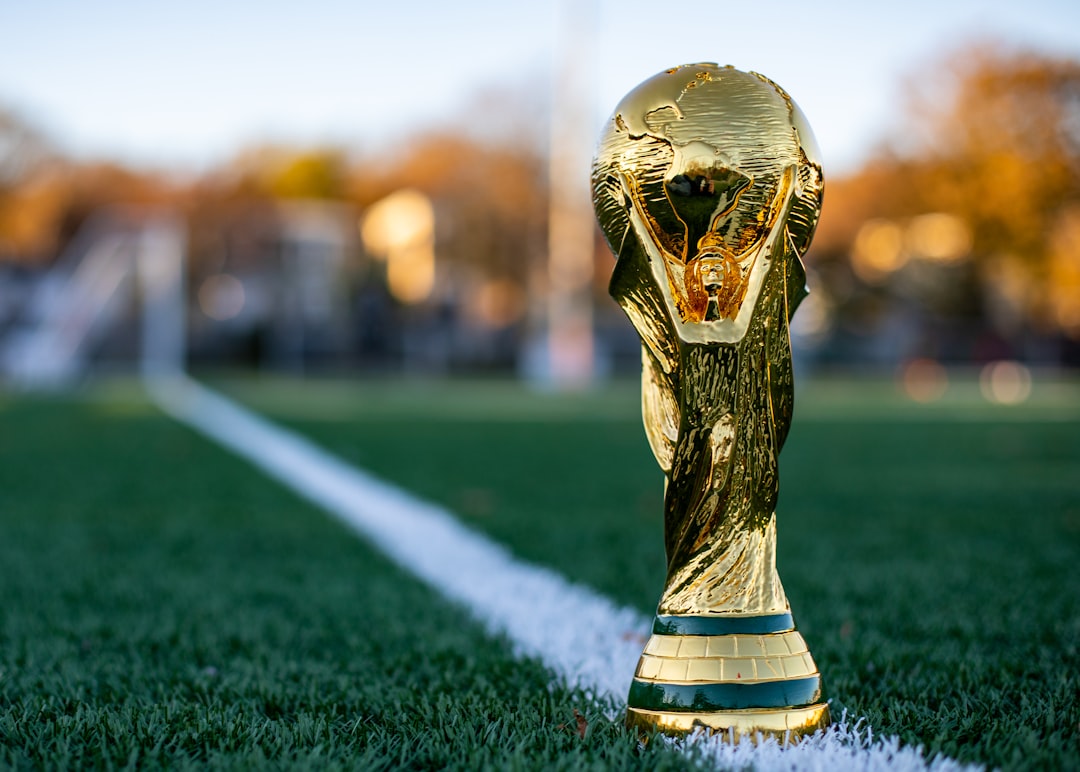
The FIFA World Cup is a spectacle unlike any other, complete with the roar of the crowd, the tension of a penalty shootout, and the pure joy of a winning goal. The drama playing out on the field has millions of people glued to their screens worldwide. However, the World Cup standings are a vital factor that determines advancement and, eventually, glory, even in the face of individual brilliance and exciting upsets. These charts, which are painstakingly updated following each game, clearly show which countries are establishing their dominance & which are in danger of being eliminated.
Gaining an understanding of the standings is essential to understanding the tournament’s story, which includes the strategic struggles, unanticipated victories, and unavoidable heartbreaks. The group stage, which is the first stage of the World Cup, is a test that separates the contenders from the pretenders. Each of the twelve groups, which consist of four countries, plays each other once in a round-robin format. Because only the top two teams from each group will move on to the knockout stages, the stakes in these games are extremely high.
Here, strong performances, strategic thinking, and a little bit of luck are crucial. Group Points: The Main Measure. The accumulation of points is the group stage’s primary currency. A team receives three valuable points for winning, one point for drawing, & zero for losing. These points are used to rank the teams within their groups, creating the initial hierarchy. Strong starts can give teams a big psychological edge and give them more freedom to play in later games.
On the other hand, a country may be under tremendous pressure to achieve results and possibly take on riskier tactics if they make a mistake early on. A contemporary game-changer is the Three-Point Revolution. It’s critical to observe how football point systems have changed over time. In the past, a win was worth two points, but in the modern game, everyone uses three points to win.
The main goal of this innovation was to promote more attacking play and, as a result, more victories. Teams are now more motivated to go for the jugular instead of settling for a potentially less satisfying draw, which has had a significant impact. Zero Points: Early defeat’s grim reality. The zero-point total becomes a clear sign of a team’s difficulties in the tournament for teams that consistently struggle.
| Team | Matches Played | Wins | Draws | Losses | Goals For | Goals Against | Points |
|---|---|---|---|---|---|---|---|
| Team A | 3 | 2 | 1 | 0 | 5 | 2 | 7 |
| Team B | 3 | 1 | 2 | 0 | 4 | 3 | 5 |
| Team C | 3 | 1 | 1 | 1 | 3 | 3 | 4 |
| Team D | 3 | 0 | 2 | 1 | 2 | 4 | 2 |
If a team in a group with four teams competing for two spots receives zero points from their first games, their chances of moving on are virtually eliminated. This situation frequently results in dejected performances and early competition withdrawals. Rules for Tie-Breaker: When Points Are Insufficient. Ties in points between two or more teams are inevitably common during the close and hotly contested group stage. When this occurs, the final standings are decided using a carefully crafted set of tie-breaker rules.
In order to maintain fairness & settle close races for qualification, these regulations are essential. The First Line of Defense is a different goal. The first & most widely used tie-breaker is goal difference. This is determined by deducting the total number of goals a team has given up from the total number of goals they have scored in all group games.
A greater goal differential, which reflects both offensive and defensive strength, is a sign of a better overall performance. It’s an easy-to-use yet efficient method of dividing teams with equal point totals. Attacking intent is rewarded. The number of goals scored is the next tie-breaker if teams are still tied after goal differential.
Teams that have proven more adept at scoring goals during the group stage are rewarded by this rule. Teams that have been more aggressive & successful in converting their opportunities are favored. The Direct Comparison: Head-to-Head Record.
The head-to-head record is used if the tied teams cannot be separated by goal differential and goals scored. This is the outcome of games played solely between the tied teams. Next, variables such as points earned in these particular games, the goal differential in these games, and the goals scored in these games are taken into account. This rule offers a more detailed comparison by giving priority to the teams’ direct performances against one another.
The spirit of the game, or fair play points. In contemporary football, fair play is a less frequent but increasingly important tie-breaker. FIFA awards points according to disciplinary records: one point is awarded for a yellow card, three points for a red card (two yellows), and five points for a straight red card. In this tie-breaker, the team with the fewest fair play points—that is, fewer fouls and cards—wins. This highlights how crucial good sportsmanship and following the rules are, even during intense competition.
The last resort is the drawing of lots. FIFA reserves the right to use a drawing of lots in the extremely rare event that none of the aforementioned tie-breakers are able to separate teams. Since it eliminates all performance and skill-related factors from the decision-making process, this is the final arbiter and is usually considered a last resort.
It’s an entirely arbitrary result that guarantees a resolution, no matter how unusual. After the group stage is over, the competition moves into the thrilling and brutal knockout stage. Every game is a do-or-die situation here. With every round that goes by, the pressure increases and there are no second chances.
By definition, there are only two possible outcomes in this stage: either you advance or you are eliminated. The first obstacle is the round of sixteen. The 16 eligible teams are paired off according to their group stage results in the Round of 16. Each match’s winners advance to the quarterfinals, while the losers are sent home. Intriguing matchups between group winners and runners-up frequently occur in this round.
Leading the Group versus. A tactical chess match came in second. The strategies used during the group stage are frequently reflected in the Round of 16 matchups.
Teams that placed second in other groups are frequently faced by teams that have won their own. Although this is never guaranteed in a World Cup, a group winner may be thought to have earned a marginally better draw, which can lead to intriguing tactical considerations. Unexpected Upsets: The Cinderella Tales. Although results are frequently determined by rankings and form, dramatic upsets can also occur during the Round of 16.
Countries that were viewed as underdogs against more powerful opposition or that were not given the chance to advance from their groups have the chance to leave their mark and leave enduring memories. These successes frequently demonstrate a team’s tenacity, tactical flexibility, and unwavering resolve. The Elite Eight are the quarterfinals.
The eight winning teams from the Round of 16 come together in the Quarterfinals. The stakes are even higher because a spot in the semifinals and, consequently, the opportunity to compete for the coveted trophy are at stake. The world’s top footballing nations compete against one another in these matches, and the intensity is evident.
Titans Collide: Superpower Conflicts. The Quarter-Finals, which pit established footballing titans against one another, often include some of the most eagerly awaited games of the entire competition. These are frequently close games that are decided by a set-piece stroke of luck, pivotal tactical choices, or even moments of individual brilliance. Emerging Nations: Rising Stars. The Quarter-Finals can give up-and-coming countries a chance to stand out on the international scene alongside the well-established titans.
Their presence represents a noteworthy accomplishment & highlights the expanding pool of football talent. Their performances have the potential to uplift the sport in their respective nations and motivate future generations. The Road to the Final: Semi-finals. The four winning teams from the Quarterfinals compete in the World Cup’s penultimate stage, the Semi-Finals. The World Cup trophy will be awarded to the winners of these two games in the Grand Final. The third-place playoff is where the losers will compete.
Two Matches to Glory: The Ultimate Competition. When it comes to the number of teams left, the Semi-Finals are the highest level of competition. Players and coaches are under tremendous pressure because winning the World Cup is a real possibility. These games can create some of the most iconic moments in World Cup history and are frequently emotionally charged. The Third-Place Playoff: The Heartache of Failure. The disappointment of not making it to the final is immense for the two losing Semi-Finalists.
They still have the chance to compete in the third-place playoff, though, and finish their tournament on a high note. Even though this match isn’t for the ultimate prize, it’s still a fiercely competitive event that can give the winning country bragging rights and a sense of accomplishment. An entire month of thrilling football culminates in the FIFA World Cup Final. The two top teams compete for supreme glory in the world’s most watched sporting event. In this case, there is only one result in the standings: champion and runner-up.
The Championship Showdown: The Dream of a Nation Fulfilled. The Final is a match with unmatched anticipation, history, & tradition. The two teams are on the verge of immortality after surviving the demanding group stage and the harsh knockout stages. Both the reward and the pressure are tremendous. The title of world champion is given to the victor, a distinction that is passed down through the generations.
The silver lining is the legacy of the runner-up. The runner-up team accomplishes an incredible feat by making it to the World Cup Final, even though they are not the winners. They have persevered, been skilled, and dedicated throughout their journey. Their performance will be remembered and honored by their countrymen, as they have demonstrated that they are among the best in the world of football. A country’s sporting ability, strategic planning, and the commitment of its players & staff are all reflected in the World Cup standings, which are much more than just a temporary scoreboard.
These constantly shifting charts depict the journey from the first group stage to the final, telling a gripping tale of victory, heartbreak, & the enduring spirit of the beautiful game. Worldwide Recognition and National Pride. National pride is greatly impacted by a country’s performance in the World Cup standings. An entire nation can come together through a deep run in the competition, creating a feeling of shared identity and collective accomplishment.
A strong performance in the standings can help countries that haven’t had much success in football in the past gain international attention and raise their profile in the sport. Social & economic catalysts. Strong World Cup results can serve as social and economic catalysts in addition to their immediate sporting effects. A successful World Cup campaign can result in increased tourism, investments in sports facilities, and a rise in national cohesion. The World Cup heroes frequently serve as an inspiration to young, aspiring athletes, which could result in a rise in the sport’s participation.
Development of Performance and Strategies. Also, the World Cup acts as a worldwide testing ground for player development & tactical innovation. The standings have the power to impact coaching practices and playing styles all over the world by showcasing which teams are winning and how. Successful teams frequently demonstrate improvements in player development, fitness, & strategy, which are then observed and imitated by others. A Collection of Moments.
In the end, the World Cup standings serve as the foundation for innumerable legendary moments. They document the emergence of new stars, the rise and fall of nations, and the ongoing drama that makes the World Cup the most fascinating sporting event on the planet. Every point gained, every victory obtained, and every round advance adds a new chapter to the intricate and constantly changing fabric of football history. The quest for the top spot in the standings is evidence of the allure of competition for everyone & the unwavering human drive to succeed on the biggest stage possible.
.
FAQs
What is the World Cup standing?
The World Cup standing refers to the current rankings of national soccer teams in the FIFA World Cup tournament. It reflects the performance and points earned by each team in the competition.
How is the World Cup standing determined?
The World Cup standing is determined based on the number of points earned by each team in the tournament. Teams earn 3 points for a win, 1 point for a draw, and 0 points for a loss. The standing is also influenced by goal difference and other tie-breaking criteria.
Where can I find the latest World Cup standing?
The latest World Cup standing can be found on the official FIFA website, as well as on various sports news websites and soccer-related platforms. It is regularly updated to reflect the outcomes of the matches in the tournament.
What is the significance of the World Cup standing?
The World Cup standing is significant as it determines which teams advance to the knockout stages of the tournament. It also reflects the overall performance and success of each national team in the competition.
How does the World Cup standing impact the tournament?
The World Cup standing impacts the tournament by influencing the matchups in the knockout stages. Teams with higher standings may face theoretically weaker opponents, while lower-ranked teams may face tougher challenges. Additionally, the standing can affect a team’s morale and confidence going forward in the tournament.












Leave a Reply