
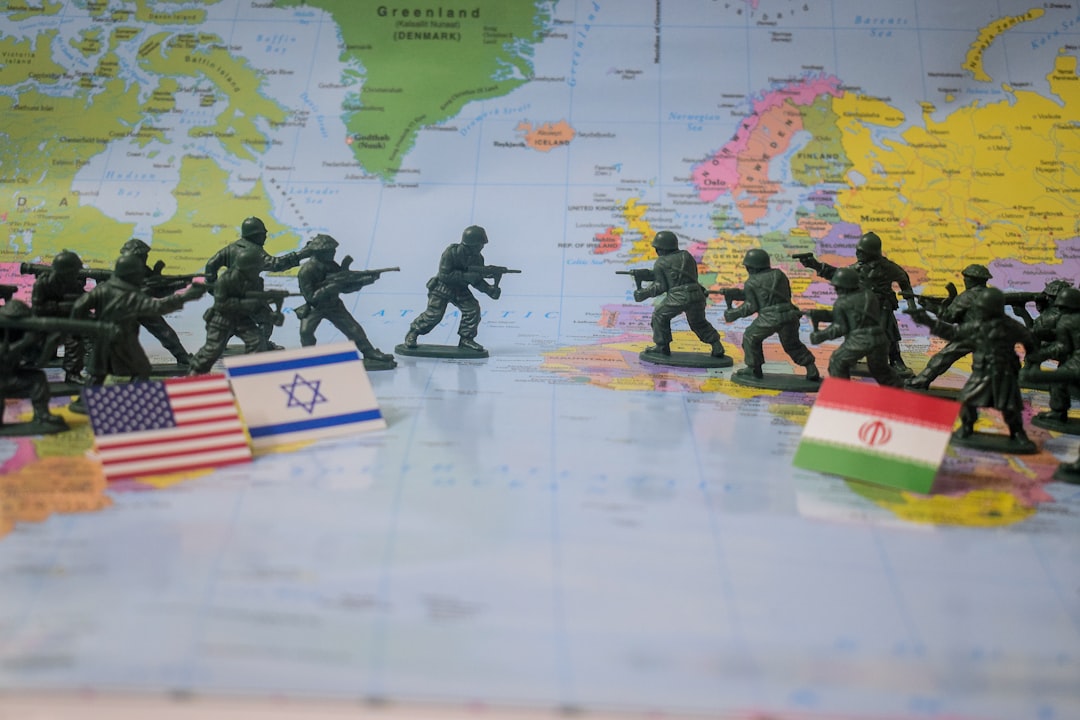
It’s almost a given that Israel won’t view a potential US-Iran nuclear agreement favorably. This is more than just a gut feeling; it’s a deeply rooted viewpoint influenced by geopolitical realities, historical context, & a common understanding of threats. Therefore, the belief that any agreement with Iran, regardless of its precise terms, will inevitably jeopardize Israel’s security is often the basis for people like Donald Trump voicing strong opposition to such a deal. This viewpoint isn’t concerned with the specifics of enrichment levels or inspection procedures; rather, it is based on a deep mistrust of the goals and capabilities of the Iranian regime & a belief that Jerusalem will always be in danger if concessions are made to Tehran. For Israel, the possibility that Iran has nuclear weapons is an existential threat rather than just a regional power struggle.
This is not hyperbole; rather, it is a deeply ingrained national belief that has been shaped by ongoing geopolitical tensions and historical trauma. An Examination of Iranian Rhetoric. Consider what Tehran has said over the years. “Death to Israel” chants, calls for Israel’s annihilation, and a persistent delegitimization of the Jewish state are all examples of this. From Israel’s perspective, this is more than just political posturing; it is an obvious sign of hostile intent. It makes sense that Israel would consider it an intolerable risk when a regime that publicly expresses such sentiments is also pursuing technology that could lead to nuclear weapons.
The Network of Regional Proxy. Iran is not an isolated entity. Hezbollah in Lebanon, Hamas in Gaza, several militias in Iraq and Syria, and the Houthis in Yemen are just a few of the powerful proxy organizations they have assembled. These organizations constantly directly threaten Israel’s borders & stability, & they are frequently armed and funded by Iran. Israel views any agreement that releases Iranian resources—whether through the lifting of sanctions or a rise in oil earnings—as subtly bolstering these proxies, raising tensions in the region and raising the possibility of conflict.
It is feared that if Iran becomes wealthier, Hezbollah will become wealthier and launch more advanced rockets against Israeli cities. A History of Deception: A Trust Deficit. Unfortunately, there have been many instances of deceit and clandestine activity throughout the history of Iran’s nuclear program.
Iran has frequently been found to be breaking non-proliferation agreements by the international community, from covert facilities to covert enrichment operations. Regardless of the terms of any agreement reached with Tehran, Israel finds it extremely difficult to trust this track record. When it serves their strategic interests, they operate under the presumption that Iran will find a way to cheat, get around agreements, or just walk away from them.
| Metrics | Data |
|---|---|
| Article Title | No US-Iran Deal Will Ever Benefit Israel. So Expect Trump … |
| Topic | US-Iran Deal and its impact on Israel |
| Author | Not specified |
| Publication Date | Not specified |
| Key Point | Argues that no US-Iran deal will benefit Israel and predicts Trump’s actions |
In addition to being a matter of personal preference, Donald Trump’s opposition to an Iran deal draws from conservative foreign policy ideas and a specific perspective on US-Israeli relations. Despite appearing isolationist, his “America First” foreign policy was frequently entwined with ardent support for Israel, especially when it came to taking on perceived enemies like Iran. conforming to an Israeli hardline position. It’s no secret that successive Israeli administrations have pushed for a far harsher stance toward Iran, especially under Benjamin Netanyahu. A clear red line on nuclear enrichment, severe sanctions, and maximum pressure have been their constant demands. Many saw Trump’s 2018 withdrawal from the Joint Comprehensive Plan of Action (JCPOA) as supporting this extreme Israeli viewpoint.
The JCPOA, which offered too many concessions for too few long-term benefits, was viewed as seriously flawed by many in Israel and by Trump’s political base. The “Weak Deal” Story. The JCPOA’s alleged transient nature & sunset clauses were frequently the focus of criticism. It was argued that rather than completely eliminating Iran’s nuclear aspirations, the agreement only postponed them. Trump & other critics claimed that Iran would be free to pursue nuclear weapons with little international oversight after the agreement’s limitations expired.
A temporary halt to an existential threat is seen by Israelis as an invitation to more conflict rather than a solution. They believe that the current agreements fall short of their ideal solution, which would permanently eliminate Iran’s capacity to produce nuclear weapons. America’s position as Israel’s most steadfast ally. The United States has a moral and strategic duty to safeguard Israel’s security, according to many US conservatives and pro-Israel activists. Opposing any policy that might be perceived as undermining Israel or bolstering its enemies is a common manifestation of this belief.
Opposition becomes nearly inevitable when an Iran deal is seen through this lens, especially by someone like Trump who has constantly positioned himself as Israel’s unmatched defender. It’s about showing unwavering support for an ally, even if that means deviating from more general international agreement. Lifting economic sanctions is typically one of the most controversial parts of any nuclear agreement with Iran. Israel and its allies are extremely skeptical of this, despite supporters’ claims that it is essential to obtain Iran’s cooperation.
financing harmful activities. Regardless of how Iran plans to use the money, the main worry is that the lifting of sanctions will unavoidably free up resources that Tehran can use for its military, nuclear program, & proxy network. It’s a straightforward economic fact: Iran can spend more money if it has more, and historically, a sizable amount of that money has been used for initiatives that threaten Israel and destabilize the region. This is based on prior behavior rather than merely inciting fear. avoiding supervision.
There is a strong belief that Iran is skilled at clandestine financial operations & will find ways to get around oversight, even in the presence of mechanisms to monitor how funds are used. It is extremely difficult for international organizations to track every dollar due to the opaque nature of the Iranian economy and the Revolutionary Guard Corps’ extensive involvement in many different sectors. Therefore, even though a deal may discuss specific uses for funds, the actual situation is frequently far more complicated and challenging to manage. supporting the government. Sanctions relief can support the legitimacy and stability of the Iranian regime in addition to providing direct military funding.
A more stable government is frequently one that can increase trade and investment and provide economic prosperity to its citizens. Israel believes that an Iranian regime that is more powerful and stable—especially one that upholds its extreme ideology—is ultimately more dangerous. They favor a regime that is weakened by economic pressure because they think this raises the possibility of internal reform or even regime change. Israel is extremely cautious about any change in the Middle East’s power dynamics. This delicate balance is often thought to be upset by an Iran deal, which could empower Iran at the expense of Israel and its regional allies.
A Note to Allies in the Arab World. Due in large part to a common fear of Iran, Israel has developed closer relations with a number of Sunni Arab nations. These partnerships, like the ones established by the Abraham Accords, are predicated on a shared perception of the Iranian threat. The US may give the impression that it is not entirely committed to containing Iran if it strikes a deal with Iran that Israel and these Arab nations view as weak or concessionary.
As other countries look for their own deterrents against a newly empowered Iran, this could cause these fledgling alliances to fall apart or, worse, accelerate a regional nuclear arms race. A nuclear arms race is a threat. For Israel, this is probably one of the scariest situations.
Other regional powers like Saudi Arabia or Egypt may pursue their own nuclear programs if Iran is perceived as moving closer to nuclear capability, even if it is only within the parameters of an agreement. This would significantly raise the likelihood of widespread conflict in an already volatile region by creating an extremely dangerous and unstable environment. Israel is aware of the delicate balance and the possibility of a domino effect because it is the only undeclared nuclear power in the area. US leverage is declining.
Tougher stance advocates contend that any agreement that relieves Iran of sanctions or grants it international legitimacy reduces US power. It is much more difficult to re-impose pressure in the event that Iran violates the terms of the agreement or engages in other harmful activities after sanctions are lifted and Iran is reintegrated into the global economy. This issue draws attention to a basic distinction in approach: whether to isolate & exert pressure or to interact and attempt to moderate. It has always been Israel’s preference.
From Israel’s perspective, as well as that of many conservatives in the United States, the concept of a “bad deal” refers to the inherent risks of legitimizing a hostile regime & unintentionally enhancing its capabilities rather than merely using imprecise terminology. Delay versus. Preventive.
The main point of contention is often whether the objective is to postpone or completely stop Iran’s nuclear program. Many opponents of the JCPOA contended that it was only a “delaying tactic,” a deal that merely postponed the issue for a few years without actually resolving it. For Israel, a delay is insufficient; they aim for long-term prevention by dismantling rather than merely limiting.
Since it permits Iran to develop its infrastructure and scientific capabilities, a deal that merely kicks the can down the road is seen as creating a more dangerous situation over time. Control is an illusion. Even though certain agreements seem to provide strong inspection protocols, they may give the impression of control.
There is concern that these systems, which frequently depend on Iranian assistance, may be evaded or completely disregarded. The US or the international community may become dangerously complacent and be less inclined to take decisive action when violations occur if they begin to believe that Iran is actually abiding by a deal when it is actually cheating. Because it can give external powers a false sense of security, this alleged “illusion of control” is worse than having no deal at all. Creating a Risky Example. Lastly, making what is seen as a “bad deal” with Iran could create a risky precedent.
It could send a message to other rogue states that if a nuclear program is sufficiently long-lasting and defiant, concessions rather than harsh penalties will eventually result. This could lead to additional proliferation or give other governments the confidence to follow suit, further undermining international security. Israel must continue to take a firm and unwavering stand against the spread of nuclear weapons, especially by adversaries. This idea is compromised if Iran is permitted to “legitimately” get closer to nuclear capability, even under the terms of a deal. Essentially, opposition to any US-Iran agreement by individuals such as Donald Trump is more than just political theater.
It’s a practical reflection of a deeply held conviction among some geopolitical actors and those who support them that such a deal, in any form currently conceivable, will unavoidably empower a hostile regime at the expense of regional security and, crucially, Israel’s very existence. This viewpoint places a higher priority on prevention than management, deterrence over diplomacy when the latter is viewed as inadequate, and unwavering support for a crucial ally.
.
FAQs
What is the current status of the US-Iran deal?
The US-Iran deal, also known as the Joint Comprehensive Plan of Action (JCPOA), was originally signed in 2015. However, in 2018, the United States withdrew from the agreement, and in response, Iran began to gradually violate its terms.
How does Israel view the US-Iran deal?
Israel has been a vocal opponent of the US-Iran deal, expressing concerns about Iran’s nuclear capabilities and its support for militant groups in the region. Israeli leaders have consistently advocated for a tougher stance on Iran and have urged the United States to take a more aggressive approach in dealing with the Iranian regime.
What is the position of the Trump administration on the US-Iran deal?
The Trump administration has been critical of the US-Iran deal and ultimately withdrew from the agreement in 2018. President Trump has repeatedly stated that the deal was flawed and did not do enough to address Iran’s destabilizing activities in the region.
How has the US-Iran deal impacted Israel?
Israel has expressed concerns that the US-Iran deal did not do enough to prevent Iran from obtaining nuclear weapons and that it emboldened Iran’s aggressive behavior in the region. Israeli leaders have argued that the deal posed a direct threat to Israel’s security and stability.
What are the potential implications of no US-Iran deal for Israel?
Without a US-Iran deal in place, Israel may face increased security challenges from Iran, as well as the potential for further regional instability. Israeli leaders have called for a more robust approach to addressing Iran’s nuclear ambitions and its support for militant groups in the region.











Leave a Reply