
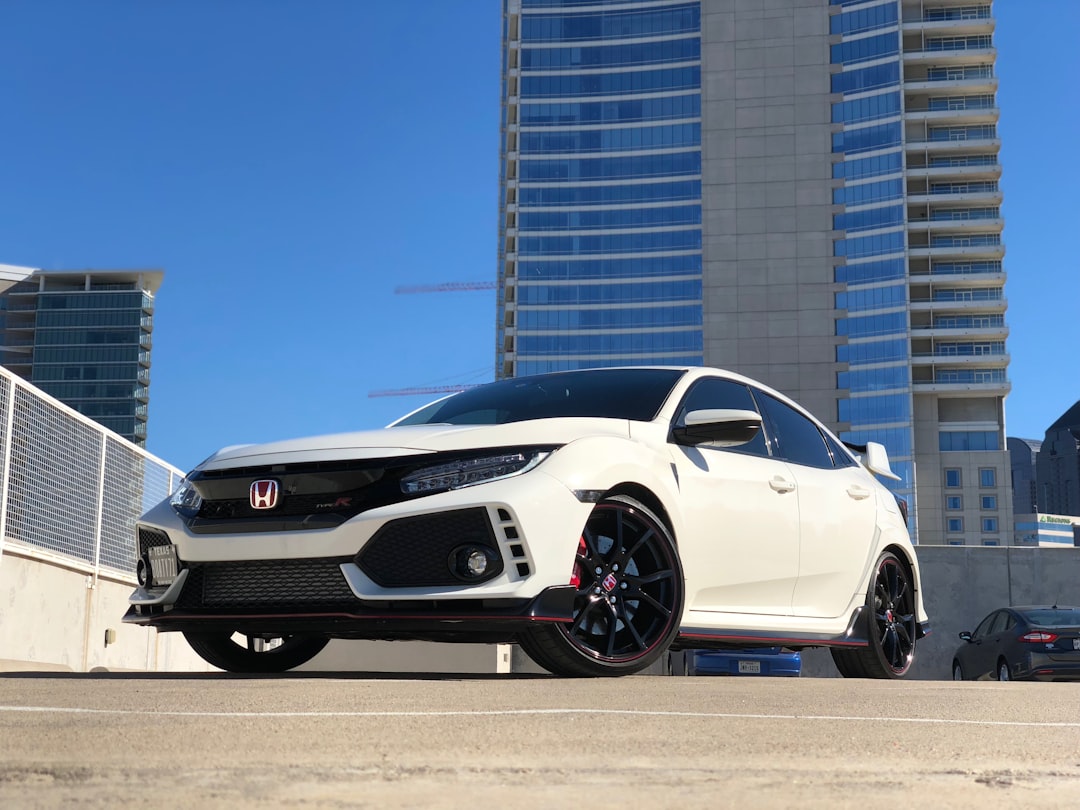
A new era of automotive excellence is being ushered in by Honda, a name associated with automotive ingenuity and dependability, which is once again at the forefront of vehicle development. The Japanese behemoth has constantly pushed the envelope, and its most recent set of innovations is expected to completely transform the road as we know it. Honda’s dedication to a cleaner, safer, & more pleasurable driving experience is evident in everything from ground-breaking developments in electrification and emission reduction to intricate safety improvements and seamless connectivity. This piece will examine the various innovations that Honda is introducing to the automotive industry, delving into the technologies & ideologies that support their progressive strategy.
Honda has an unquestionably electric vision for the future of transportation. Given the pressing need to combat climate change and lessen reliance on fossil fuels, the company has committed to electrification in a big & ambitious way. Honda is committed to achieving carbon neutrality across all of their operations and products by 2050, so this isn’t just a fad. It’s a fundamental reorientation of their entire product strategy. A daring move into the electric SUV market is the All-New Honda Prologue.
An important turning point in the company’s electric vehicle (EV) journey is the release of the Honda Prologue. This brand-new, all-electric SUV is more than just another model in their lineup; it is the result of intensive research and development & was created to satisfy the increasing demand for SUVs with zero-emission capabilities. Strategic Collaboration with General Motors: Using Synergies to Make a Global Impact.
The development of the prologue demonstrates Honda’s calculated strategy for quickening the shift to electric vehicles. The partnership with General Motors (GM) is an essential component of this strategy. This collaboration makes use of GM’s Ultium battery platform, a very adaptable and scalable EV architecture. Through this partnership, Honda can take advantage of GM’s vast EV production experience while also bringing a competitive and cutting-edge EV to market more quickly. In order to achieve wide market appeal and provide an engaging electric driving experience, the Prologue arises as a result of collaborative expertise. Design philosophy: striking a balance between electric aesthetics and iconic Honda DNA.
Honda’s ability to combine its well-known design language with the particular needs of an electric vehicle is demonstrated by the Prologue’s design. In addition to embodying the sleek and contemporary aesthetics associated with EVs, designers have worked hard to create a car that feels very Honda. This includes a focus on practicality and spaciousness, which are characteristics of Honda’s SUV lineup, as well as aerodynamic considerations to optimize range. Performance & Range: Providing convenience and assurance.
| Model | Year | Price | MPG |
|---|---|---|---|
| Civic | 2021 | 21,250 | 32 |
| Accord | 2021 | 24,770 | 30 |
| CR-V | 2021 | 25,350 | 28 |
The Prologue is designed to provide competitive performance & range, addressing the main concerns of prospective EV buyers, though specifics may still be developing. The focus is on delivering the responsive, quiet, and seamless driving experience that electric powertrains are known for. The goal is to make sure that the Prologue not only fulfills but also surpasses user expectations for long-distance travel and daily use. Beyond Prologue: Increasing the Electric Portfolio. Honda’s electric offensive is only getting started with the Prologue. In the upcoming years, the company plans to launch a number of new EV models that are aimed at different market niches.
This demonstrates a sustained commitment to leadership in the EV industry and includes a pledge to create their own proprietary EV platforms & battery technology. A Basis for Various Models: The Future Global EV Platform. Honda is making significant investments in the creation of its own adaptable worldwide EV platform.
A new generation of Honda electric cars will use this platform as their foundational architecture, giving them more freedom in terms of size, design, and use. For Honda to sustain its distinctive brand identity and technological independence over time, this internal development is essential. Battery Technology Advancement: Improving Sustainability and Performance. The key to the success of any EV is battery technology. Honda is working hard to improve battery longevity, energy density, chemistry, & charging speeds.
In order to ensure that their electric future is also environmentally responsible, the company is dedicated to developing strong battery recycling programs and sourcing battery materials sustainably. Honda has much bigger plans for the future than just electrification. In order to create safer, more convenient, and more pleasurable driving experiences, the company integrates advanced driver-assistance systems (ADAS) and connectivity features, making it a major player in the development of intelligent mobility. Honda Sensing® Suite: A Whole-System Safety Approach. A key component of Honda’s dedication to lowering collisions and enhancing driver awareness is the Sensing® suite of safety & driver-assistive technologies.
Together, these cutting-edge features monitor the driving environment & take appropriate action, giving drivers an additional degree of security. Impact Prevention & Mitigation with the Collision Mitigation Braking System (CMBS). The CMBS is intended to identify possible frontal collisions with cars or pedestrians and, in the event that the system concludes that a collision is inevitable, to automatically apply braking force. Drivers and passengers can rest easy knowing that this proactive safety feature can drastically lessen the severity of accidents or even prevent them completely. ACC, or adaptive cruise control, allows for effortless highway driving.
By automatically modifying the vehicle’s speed to maintain a predetermined following distance from the vehicle ahead, Adaptive Cruise Control (ACC) with Low-Speed Follow improves the convenience of highway driving. As a result, drivers can unwind and concentrate more on the road because they won’t have to constantly adjust their speed in traffic. Lane integrity is maintained by the Road Departure Mitigation System (RDM) and Lane Keeping Assistance System (LKAS). By applying light steering inputs, the Lane Keeping Assist System (LKAS) aids in maintaining the car’s center in its lane.
When a car is about to inadvertently veer off the road, the Road Departure Mitigation System (RDM) can detect it and offer braking and steering assistance to help the driver get back into the proper lane or lessen the severity of the departure. HondaLink®: Integrating the Automotive and Digital Domains with Ease. Honda’s all-inclusive infotainment and connectivity system, HondaLink®, is intended to smoothly combine a driver’s digital life with their car. It provides a number of features that improve entertainment, ease of use, and information access. Easy Access to Features with an Intuitive Infotainment Interface.
Drivers can easily access navigation, audio, climate control, & other vehicle functions thanks to the HondaLink® system’s user-friendly touchscreen interface. The intention is to give drivers a distraction-free experience so they can stay connected without sacrificing safety. Apple CarPlay® and Android AutoTM compatibility for smartphones.
Importantly, HondaLink® provides smooth integration with well-known smartphone platforms, such as Android AutoTM & Apple CarPlay®. This further improves convenience and connectivity by enabling drivers to access their smartphone’s apps, music, messages, and navigation directly through the infotainment system of their car. OTA (over-the-air) updates: improving performance and functionality. HondaLink®’s ability to provide Over-the-Air (OTA) updates is a major improvement.
Because software updates can be downloaded and installed wirelessly, Honda is able to continuously enhance the infotainment system’s functionality, performance, and security as well as other features of the car without having to visit the dealership. Beyond just the cars themselves, Honda is transforming the road through the production process. The company has a strong commitment to sustainable manufacturing methods and strives to reduce its environmental impact at every stage of the production process. cutting waste and emissions in manufacturing facilities. Honda has set aggressive goals to cut waste production from its factories and greenhouse gas emissions. This entails making investments in energy-efficient technology, streamlining manufacturing procedures, and putting in place extensive recycling initiatives for components used in car assembly.
Adopting Renewable Energy: Sustainable Production Power. A major component of Honda’s manufacturing sustainability strategy is the growing use of renewable energy sources. This includes obtaining electricity from renewable energy suppliers and installing solar panels at its facilities.
Honda is greatly lowering the carbon intensity of its manufacturing processes by switching to cleaner energy. Principles of the Circular Economy: Reducing waste and optimizing the use of resources. Honda is progressively integrating the concepts of the circular economy into its production.
This entails actively looking for ways to reuse and repurpose materials as well as designing automobiles for simpler disassembly and recyclability. Moving from a linear “take-make-dispose” model to a more sustainable closed-loop system is the goal. Developing Second-Life Applications & Battery Recycling.
As EV adoption picks up speed, battery management becomes critical. Honda is actively working to create strong battery recycling programs in order to recover valuable materials & reduce its impact on the environment. In order to extend the usefulness of EV batteries beyond their automotive lifespan, the company is also investigating “second-life” applications for them, such as energy storage systems. Collaborating for Effective Battery Recycling: Guaranteeing Ethical Material Recovery. Honda is working with specialized partners to create and execute battery recycling procedures that are both effective and ecologically responsible.
These collaborations are essential for minimizing waste, lowering the need for virgin material extraction, and guaranteeing that valuable metals and components are recovered from end-of-life EV batteries. Investigating Battery Second-Life: Increasing Battery Value for Energy Storage. Honda is looking into the possibility of repurposing used EV batteries for stationary energy storage applications in addition to recycling. By storing renewable energy produced by solar or wind power, these “second-life” batteries can help stabilize the grid and lower carbon emissions. Honda has not forgotten the core driving experience, even though electrification and connectivity are unquestionably important focal points.
In order to produce cars that are safe, effective, and entertaining to drive, the company keeps honing its engineering skills. A well-balanced ride thanks to improved suspension & chassis systems. Honda cars are known for their well-balanced handling and ride.
Honda engineers strive to achieve the best possible balance between ride comfort and dynamic agility through constant improvement of their suspension and chassis systems, giving drivers a secure and connected feel to the road. Innovative Suspension Technologies: Adjusting to Various Road Conditions. To further improve handling and ride quality, Honda is investing in cutting-edge suspension technologies like multi-link rear suspensions and adaptive dampers. These systems can adapt intelligently to different driving conditions and road surfaces, giving passengers a more seamless and controlled experience. Enhancing Performance and Efficiency with Lightweight Materials & Structural Stiffness.
A vehicle’s performance & efficiency can be greatly improved by using lightweight materials and optimizing structural rigidity. In order to reduce vehicle weight without sacrificing safety or structural integrity, Honda engineers are continuously investigating new materials and cutting-edge manufacturing techniques. This results in enhanced acceleration, braking, and fuel efficiency. Performance is centered on the responsiveness & efficiency of the powertrain.
Honda’s advanced powertrain development is a manifestation of its dedication to thrilling performance. Whether it’s their strong electric motors or their effective internal combustion engines, the goal is still to deliver remarkable fuel efficiency & responsive acceleration. The evolution of hybrid technology: optimizing performance and efficiency. For many years, a key component of Honda’s fuel-efficient products has been its hybrid system. To further improve efficiency, power delivery, and the overall driving experience, the company keeps improving its hybrid powertrains by incorporating increasingly complex electric motor systems and sophisticated battery management. Internal combustion engines will continue to be optimized for particular uses in the future.
Honda acknowledges that internal combustion engines will still be used in some applications for a while even though the future is becoming more & more electric. In order to ensure a seamless transition to a fully electrified future, the company is committed to further refining its ICE technologies for even higher fuel efficiency and lower emissions. Honda’s innovation philosophy is based on a profound comprehension of human needs and desires. The company’s design philosophy is essentially human-centered, emphasizing the convenience, comfort, and general well-being of both the driver & the passengers. Comfort and Intuitive Control in Ergonomic Interiors.
Ergonomics are carefully considered in the design of Honda interiors. A comfortable and easy-to-use driving & riding experience is achieved through careful consideration of the control layout, seating arrangement, & feature accessibility. High-quality materials and craftsmanship create a visually appealing and tactile environment. Honda gives careful consideration to the craftsmanship and quality of the materials used in its interiors.
The overall sense of luxury and refinement is enhanced by the tactile and aesthetically pleasing environment created by the use of high-quality materials, careful attention to detail, & well-considered finishing touches. Versatility & Spaciousness: Adjusting to Daily Life. Honda automobiles are made to be useful and flexible to meet the many demands of contemporary life. Honda cars are perfect companions for everyday commutes, family vacations, and everything in between because of their roomy interiors, ingenious storage options, and adaptable seating arrangements.
Advanced Air Purification and Climate Control: Improving Health. Honda is integrating cutting-edge climate control & air purification systems into its cars because it understands how important a comfortable & healthy cabin environment is. All residents will have a comfortable & revitalizing experience thanks to these systems’ efforts to maintain ideal humidity, temperature, and air quality. Customized Comfort for Everyone with Multi-Zone Climate Control. Regardless of the outside environment, multi-zone climate control systems enable each passenger to set their own preferred temperature, guaranteeing everyone in the car has personalized comfort.
This well-considered feature makes traveling more pleasurable & improves the passenger experience. Cleaner Air for Healthier Travel with Advanced Air Filtration Systems. Honda is dedicated to the health of its passengers, even when it comes to the air they breathe. In order to provide cleaner & healthier air for a more comfortable & advantageous travel experience, advanced air filtration systems are made to eliminate pollutants, allergens, & odors from the cabin. Honda has made a significant advancement in the automotive industry with its most recent innovations.
By embracing electrification, pioneering intelligent mobility solutions, committing to sustainable manufacturing, refining driving dynamics, and prioritizing human-centered design, Honda is not just revolutionizing the road; it is shaping the future of personal transportation. The company’s steadfast commitment to these values guarantees that its automobiles will always be associated with excellence, creativity, and a commitment to a better future for everybody.
.
FAQs
What is Honda known for?
Honda is known for manufacturing automobiles, motorcycles, and power equipment. They are also recognized for their engineering and innovation in the automotive industry.
Where is Honda based?
Honda is based in Tokyo, Japan. The company was founded in 1946 by Soichiro Honda and Takeo Fujisawa.
What are some popular Honda car models?
Some popular Honda car models include the Civic, Accord, CR-V, and Pilot. These models are known for their reliability, fuel efficiency, and safety features.
Does Honda produce motorcycles?
Yes, Honda is one of the largest motorcycle manufacturers in the world. They produce a wide range of motorcycles, including sport bikes, cruisers, and off-road bikes.
What is Honda’s commitment to sustainability?
Honda is committed to sustainability and has implemented various initiatives to reduce their environmental impact. They have developed fuel-efficient vehicles, invested in renewable energy, and implemented recycling programs in their manufacturing processes.












Leave a Reply