
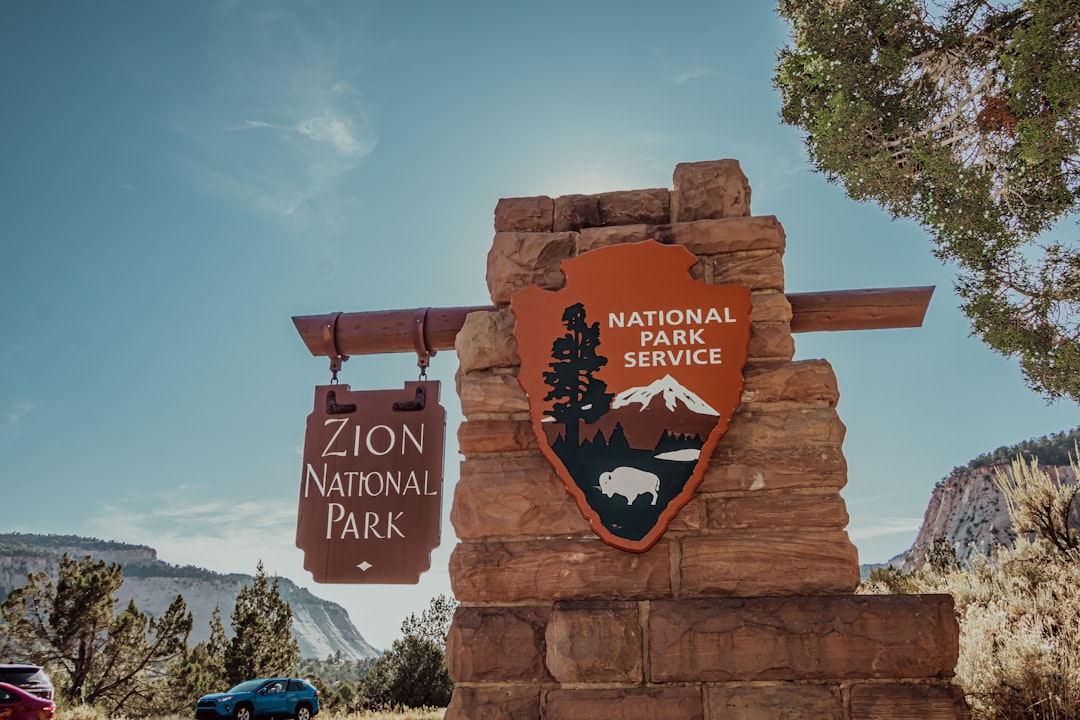
A thorough revitalization is planned for the worn-out, weathered signs that welcome guests to America’s national parks, each of which stands as a silent guardian of wonder and history. An executive order requiring a nationwide effort to restore & preserve these iconic markers was issued in response to numerous appeals and mounting concerns from park advocates and stakeholders. This ambitious project seeks to guarantee that these essential park infrastructure components serve as accurate, readable, and aesthetically pleasing depictions of the natural & historical landscapes they introduce in addition to guiding visitors. A number of factors, all of which point to the declining condition of these essential elements of the visitor experience, have led to the directive to restore the national park signage. These informational gateways have been severely damaged by decades of weather exposure, high foot traffic, and time itself.
The call for action is essentially about maintaining the integrity of the visitor experience & guaranteeing accessibility and safety for everyone who enters these protected areas, not just about aesthetics. Environmental Impact and Decades of Neglect. Some of the current signage dates back to the middle of the 20th century, and the majority has been there for decades.
The long-term effects of continuous exposure to the sun, rain, snow, wind, and even wildlife were not fully understood during this time, & building materials and methods were frequently less resilient. Freeze-thaw cycles have caused materials to crack and spall, while ultraviolet light has faded paint to the point of being unreadable. Salt spray, which speeds up corrosion and material deterioration, is an additional problem for coastal parks. Extreme temperature swings in some areas put extra strain on signage, causing warping and structural instability. Another factor contributing to wear & tear in popular parks is the sheer number of visitors.
While a buildup of dirt & grime obscures important information, bicycles, backpacks, & even unintentional contact can result in nicks and scratches. The decline in accessibility and legibility. Any park sign’s main purpose is to guide & inform. But as time has gone on, this important goal has been jeopardized.
Visitors, especially those with visual impairments, find it more challenging to read important information due to faded lettering, obscured graphics, and damaged panels. Trail names, distances, ratings of difficulty, safety alerts, and directional cues are all included in this. International tourists, senior citizens, and people with visual impairments are disproportionately affected by the loss of legibility, which may make safe and enjoyable exploration more difficult. Interpretive signs, which are intended to inform visitors about the park’s natural and cultural past, are also being degraded. An important chance for engagement and learning is lost when these are damaged or unreadable.
| Park Name | Number of Signs | Estimated Cost | Completion Date |
|---|---|---|---|
| Yellowstone National Park | 50 | 10,000 | October 15, 2022 |
| Yosemite National Park | 30 | 7,000 | November 30, 2022 |
| Grand Canyon National Park | 40 | 8,500 | September 20, 2022 |
The visitor experience is disrupted. The general visitor experience is negatively impacted by park signage deterioration in addition to accessibility. The carefully planned atmosphere that national parks aim to create can be undermined by a broken or faded sign that conveys a sense of neglect and disarray. Imagine arriving at a trailhead, excited to start a breathtaking hike, only to discover a sign with barely readable lettering that makes you wonder what the trail is called and where it leads. Frustration, confusion, & a decreased sense of immersion in the park’s natural beauty may result from this.
On the other hand, visitors’ impression of the park system’s professionalism and care is improved by well-kept, attractive signage. Preservation of Cultural and Historical Importance. Many of the park’s older signs have historical and cultural value & are themselves artifacts. They symbolize a specific period in park administration and outreach to visitors. The National Park Service’s approach to infrastructure and interpretation has evolved, as evidenced by the use of particular fonts, materials, and design styles.
This historical context would be lost if these signs were simply replaced with generic, contemporary designs. Therefore, the restoration project must strike a balance between the necessity to maintain the original character and intent of these crucial markers and the requirement for durability and clarity. This necessitates giving unique designs, materials, & production methods considerable thought. An extensive mandate for the restoration of national park signage is established by the executive order. This is an all-encompassing, park-wide project that will include the evaluation, maintenance, and, if required, replacement of all signage, from conspicuous entrance markers to subtle trail indicators. Every facet of park signage is included in the initiative’s comprehensive design.
inventory and evaluation of the current signage. A comprehensive inventory and evaluation of all signage in each national park is part of the restoration initiative’s first phase. Each sign’s condition, material, age, and informational content will all be meticulously documented.
This assessment will be carried out by highly skilled park employees, frequently in conjunction with outside conservation experts. To guarantee uniformity throughout all parks, they will employ standardized procedures. All subsequent restoration decisions will be based on this inventory, which will determine which signs need only minor cleaning and repair, which require structural reinforcement or partial replacement, and which need to be replaced entirely because of irreversible damage or out-of-date information. In order to efficiently plan and monitor the restoration process, digital tools and mapping technologies are being used to create exact records of each sign’s location & condition. Setting priorities according to condition & impact.
The urgency of restoring each sign varies. Tasks will be ranked according to a variety of criteria by the initiative. Signs that are unreadable, dangerous, or necessary for navigation will be the most important. Signs indicating important overlooks or facilities, as well as entrance signs & major trail intersections, will be attended to right away. Following these pressing needs, signs with historical or cultural significance that are still operational may be taken care of, with an emphasis on preservation methods.
Another important factor will be the possible effects on park operations and visitor experiences. For instance, a sign directing guests to a well-liked but dilapidated campground might take precedence over an interpretive panel that receives fewer visitors. Selection of materials and standardization. The creation of modern, yet historically sensitive, signage standards is a key component of the restoration.
This entails choosing materials that are long-lasting, ecologically friendly, & visually harmonious with each park’s natural and cultural landscapes. This project will continue the National Park Service’s long-standing goal of creating a cohesive visual identity. There will be a general framework for design, guaranteeing consistency in typography, color schemes, and graphic elements where appropriate, while maintaining the unique character of each park. In addition to making future maintenance easier, this standardization will help with brand recognition. Longevity, vandalism resistance, and recyclability will all be taken into account when choosing materials.
For example, corrosion-resistant finishes will be applied to metal components, and sturdy hardwoods will be treated to endure severe weather. implementation throughout the park system in phases. The restoration will be carried out gradually throughout the whole park system due to the enormous number of national parks and the sheer amount of signage involved. This phased strategy makes it possible to train staff, allocate resources effectively, & create best practices that can be applied to other parks. Priority may be given in earlier stages to specific areas or parks with especially pressing needs.
The National Park Service can modify its plan in light of the lessons discovered during the project’s early phases thanks to the phased rollout, which guarantees a more successful and efficient implementation overall. Throughout the restoration process, this methodical approach seeks to minimize disruption to park operations and visitor services. The project is a conscious attempt to restore the personality and clarity of the park’s most iconic signage components rather than just fixing them. This covers everything, from the conspicuous welcome signs to the subtle trailhead markers.
Both functionality and maintaining the park’s distinct character are priorities. The majestic signs at the entrance. The imposing entrance signs that greet visitors to national parks frequently give the impression of the park’s grandeur.
These signs, which are often made of metal, wood, or stone, have witnessed innumerable arrivals. The restoration will concentrate on maintaining their structural integrity, removing years’ worth of dirt & graffiti, fixing any lettering damage, and making sure that the park’s name & founding date are legible and historically correct. Careful cleaning & inpainting techniques will be used to restore the original appearance of signs carved into natural rock formations. Metal signs will be refinished and shielded from rust, while wooden signs will be treated with preservatives to prolong their life & stop additional deterioration. The famous Ranger Station signs that are scattered throughout the area will also be revitalized, making sure they are both aesthetically pleasing & educational in keeping with the park’s history.
Informative markers at the trailhead. For hikers and explorers, the trailhead markers are essential navigational aids. For both enjoyment and safety, their legibility is crucial. The restoration project will guarantee that all trailhead signs clearly display trail names, distances, estimated hiking times, and suggested skill levels.
Maps that are faded or damaged will be reprinted using sturdy, weatherproof materials. The original maps will be updated to reflect current conditions while preserving a historically appropriate design if trail systems have changed & the original maps are no longer accurate. To ensure accuracy, this will require close coordination with trail maintenance teams and park rangers.
In order to provide all explorers with clear & unambiguous guidance, the initiative will also address directional signage at trail intersections. Historical markers and panels with interpretations. National parks’ interpretive panels and historical markers are priceless educational resources that vividly depict the land’s & its people’s stories.
Cleaning these panels, fixing any text or graphic damage, and making sure they are shielded from additional environmental deterioration will be the main goals of the restoration. This could entail reinforcing panels, replacing worn frames, or even reprinting faded content using contemporary archival-quality materials that are made to endure outdoor exposure. The intention is to make these markers’ rich narratives interesting and approachable for future generations. This entails making certain that the visuals are impactful & clear, and that the language is comprehensible without being unduly simplified.
Directional signs & wayfinding. A smooth visitor experience depends on efficient wayfinding. All types of directional signage, such as those directing guests to campgrounds, visitor centers, restrooms, & points of interest, will be covered by the restoration project. This will guarantee that, regardless of a visitor’s level of park familiarity, directions are unambiguous, consistent, and simple to comprehend.
In order to maximize their efficacy and reduce visual clutter within the natural landscape, the placement of these signs will also be examined. This entails making sure that signs are easily seen from a distance without unduly interfering with the surrounding landscape. These restored wayfinding systems will be distinguished by the use of standardized symbols and succinct, straightforward language. The careful selection of materials & the use of suitable preservation techniques are critical to the success of this restoration project. This involves striking a careful balance between environmental responsibility, historical accuracy, and durability.
The National Park Service is dedicated to using techniques that respect each park’s distinctive character while guaranteeing the longevity of the restored signage. Long-lasting and sustainable materials. The selection of materials is heavily influenced by the current understanding of environmental stewardship. The initiative will place a high priority on using long-lasting, sustainable materials that are made to survive the challenging conditions found in national parks. This entails choosing materials with minimal environmental impact, utilizing recycled content whenever feasible, & making sure the materials are inherently resistant to UV rays, insect infestation, & decay.
For instance, non-toxic, environmentally friendly sealants will be applied to hardwoods that are sourced ethically, and composite materials derived from recycled plastics can provide exceptional longevity and low maintenance. The objective is to design long-lasting signage with a low environmental impact in addition to being aesthetically pleasing. Reproduction and restoration of historical accuracy. Accurate replication and preservation methods will be given top priority in the restoration process for signs with substantial historical or cultural significance. This could entail utilizing materials that closely resemble the original installations, finding vintage fonts, and investigating original manufacturing techniques.
In order to preserve the historical integrity of the current signage, conservators will be hired to carefully clean, repair, and, if needed, reinforce it. Exact replicas will be made using contemporary materials that closely resemble the originals’ appearance and texture in situations where the original materials are no longer feasible. Because of their commitment to historical accuracy, the restored signs add to rather than take away from the park’s story. Historical archives, original blueprints, and even interviews with those who worked on the original sign installations could all be part of this process. Advanced coatings for protection and weatherproofing. The restoration will use cutting-edge weatherproofing & protective coatings to fend off nature’s unrelenting forces.
Incorporating drainage systems into sign structures to prevent water damage, using corrosion-resistant hardware and fasteners for metal signs, & applying UV-resistant finishes to paint and wood are all examples of this. Specialized sealants can be applied to carved or etched signs to prevent erosion and water intrusion. In order to ensure that the restored signs can last for decades to come with little ongoing maintenance, the goal is to build a multi-layered defense against the elements. New technologies are also being investigated for possible use, such as self-cleaning coatings that use rain and sunlight to dissolve and remove dirt.
Techniques for reducing vandalism & graffiti. In many public areas, including national parks, vandalism and graffiti are regrettable realities. The restoration project will include methods to lessen these problems. This may include using graffiti-resistant coatings that allow for easy removal of markings, designing signs with fewer vulnerable surfaces, and strategically placing signs to deter attempted vandalism.
Advanced deterrents or integrated security features might also be taken into consideration in some areas. The goal is to create signage that is not only informative and beautiful but also resilient against deliberate damage, thereby preserving the visitor experience and reducing the costs associated with repeated repairs. This can involve covering informational content with tempered glass or extremely durable polycarbonate panels. Such a large-scale project needs strong funding and widespread cooperation to succeed.
In order to realize this vision & guarantee the preservation of these essential components of the park experience for future generations, the National Park Service is collaborating with a wide range of partners. Recognizing the significant impact of well-maintained signage on the national park system, the executive order has sparked support from a number of sectors. Sponsorships & Public-Private Partnerships. Recognizing the substantial financial needs of this initiative, the National Park Service is actively pursuing public-private partnerships and corporate sponsorships. Many corporations and foundations have a vested interest in supporting the preservation of America’s natural & historical treasures. These partnerships can provide critical funding for material acquisition, specialized labor, and even research & development of new restoration techniques.
Individual sign restoration projects as well as larger park-wide projects are examples of sponsorship opportunities. These partnerships’ prominence can also increase public awareness & inspire more support. Businesses that are dedicated to historical preservation or environmental conservation are especially well-suited for this kind of cooperation.
Grants and Appropriations by Congress. The executive order is supported by a pledge to obtain congressional appropriations and investigate different grant opportunities. These governmental allocations will form the core of the funding for the restoration, ensuring that the National Park Service has the necessary resources to undertake this massive project. Grant programs, both federal and private, will also be a vital source of additional funding, allowing for specialized projects and innovations within the restoration process.
The clear mandate from the executive order provides a strong foundation for advocating for these essential budgetary allocations. This covers continuing assistance for upkeep and any necessary replacements in the future. Volunteering initiatives and community engagement. The power of volunteers and community involvement will be instrumental in the success of the national park sign restoration.
Citizen scientists and passionate park supporters can play a crucial role in tasks such as inventorying signs, assisting with cleaning, and even participating in basic repair work under the guidance of trained professionals. Local communities surrounding national parks often have a deep sense of ownership and pride in their nearby natural wonders, and engaging them in the restoration effort can foster a stronger connection to the parks and a greater sense of stewardship. Organizing volunteer days and community workshops can not only advance the restoration but also educate the public about the importance of these signs & the ongoing efforts to preserve them. The significance of sustainability & future maintenance. A critical component of the national park sign restoration initiative is the development of long-term maintenance plans and strategies for sustainability. Simply restoring the signs is not enough; ongoing care is essential to ensure their longevity.
This involves establishing regular inspection schedules, allocating dedicated maintenance budgets, and training park staff in proper signage upkeep. The initiative will also explore innovative approaches to signage maintenance, such as the use of smart technologies that can monitor sign condition and alert maintenance teams to potential issues. By prioritizing sustainability and regular care, the National Park Service aims to prevent future deterioration and ensure that these vital markers of our national heritage remain in pristine condition for generations to come. This includes developing detailed protocols for cleaning, repainting, and structural repairs.
The restoration of national park signage is more than just a facelift for informational markers; it is a profound commitment to preserving the accessibility, integrity, and inspirational power of America’s most cherished landscapes. This ambitious undertaking, driven by an executive order & supported by a broad coalition of stakeholders, promises to breathe new life into these weathered sentinels, ensuring they continue to guide, inform, and inspire visitors for decades to come. The investment in these vital pieces of park infrastructure underscores the enduring value of our national parks & the National Park Service’s dedication to their preservation.
.
FAQs
What is the purpose of the national park sign restoration order?
The purpose of the national park sign restoration order is to preserve and maintain the historical and informational signs within national parks, ensuring that they remain in good condition for visitors to enjoy and learn from.
Who issued the national park sign restoration order?
The national park sign restoration order was issued by the National Park Service, which is responsible for managing and preserving the national parks and their resources.
What does the national park sign restoration order entail?
The national park sign restoration order entails a comprehensive assessment of the condition of all signs within the national parks, followed by a prioritized restoration and maintenance plan to ensure that the signs are preserved for future generations.
Why is it important to restore and maintain national park signs?
It is important to restore and maintain national park signs because they serve as important historical and informational markers within the parks, providing visitors with valuable information about the park’s natural and cultural resources, as well as safety and directional guidance.
How will the national park sign restoration order be funded?
The national park sign restoration order will be funded through a combination of federal appropriations, private donations, and partnerships with organizations and individuals who are committed to preserving the national parks and their resources.












Leave a Reply